
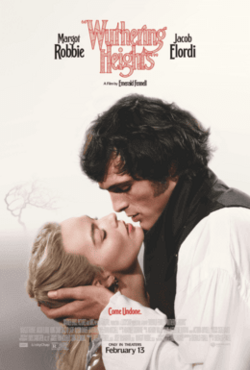
When I first saw the promotions for the new Wuthering Heights movie, directed by Emerald Fennell, I was excited. I love a good adaptation from a classic, not to mention a romance. The popularity of the movie even convinced me to start reading the book, written by Emily Brontë in 1846. Unfortunately, that was the best (and only) thing this movie did for me, and I was left wondering how so many people could have possibly enjoyed it.
Firstly, the casting of this movie confuses me. In adaptations, directors often like to take liberties and make choices that reinforce their interpretation of the media, and I usually would agree that they have a right to do that. However, in the original Wuthering Heights, the race and appearance of the characters play a large role in their story.
Heathcliff, during a time when slavery was still practiced, is a dark-skinned child who is taken in by a noble family and somehow beats the odds, becoming rich and respected. Catherine’s choice between the two men is complicated by Edgar Linton’s obvious whiteness and status compared with Heathcliff’s questionable lineage. In addition, Catherine herself is often juxtaposed with Isabella Linton’s fair skin and blond hair, which was the beauty standard of the time. The movie, however, entirely leaves this behind, casting Jacob Elordi as Heathcliff and Shazad Latif as Linton. Margot Robbie’s blond hair completely reverses the dynamic between her and Isabella in a way that I found almost demeaning to Alison Oliver’s character.
On the same note, I found the actor’s ages distracting as well. In the novel, Heathcliff and Catherine are in their teens and twenties during their romance. Watching two adults in their mid-thirties act like twenty-year-olds and even teenagers was something that really took away from their performances, and felt strange and forced.
Another thing that I found confounding was the addition of so much sexual content. Obviously, a woman in the nineteenth century would not risk writing anything that could be considered even slightly raunchy, so it makes sense that there are no sex scenes in the novel. However, the movie generously supplies this content, even between characters who don’t appear in the same time frame in the original book. It felt like every few seconds, I was awkwardly trying not to look at the people next to me. I would go so far as to say that there seemed to be no point to this movie besides attractive characters having sex on screen.
The one good thing I will say about this movie is that I did like the style. The strange costuming and set design, paired with cinematography that prioritized bright colors and stark juxtaposition, was something that I have never seen before, and that I truly found interesting. I believe that if Fennell had prioritized a true interpretation of the book, as opposed to a shallow, steamy romance, this could have been a very good movie.
In the end, Wuthering Heights seemed to have no real purpose. From strange casting choices to an abrupt, unsatisfying ending, this movie did not meet my expectations at all. I would, however, urge anyone who was at all interested in this movie to read the book. It is beautifully written, exciting and a meditation on generational trauma and love. So if you’ve been at all influenced by the discussion on this classic, head to a book store instead of a theater and find something with a true meaning.