
Imagine you’re decorating your kitchen, and it comes time to design your kitchen backsplash. You need to figure out exactly how many square inches of tile you’ll need, and suddenly you’re getting flashbacks to your horrible sophomore year geometry class and decide to give up before you even start because the math just seems too daunting. At the time, math just seemed like a nuisance, easy to give up on and move on. But now, in real-world applications, your misgivings in math seem to be catching up to you. Why? Because math counts.
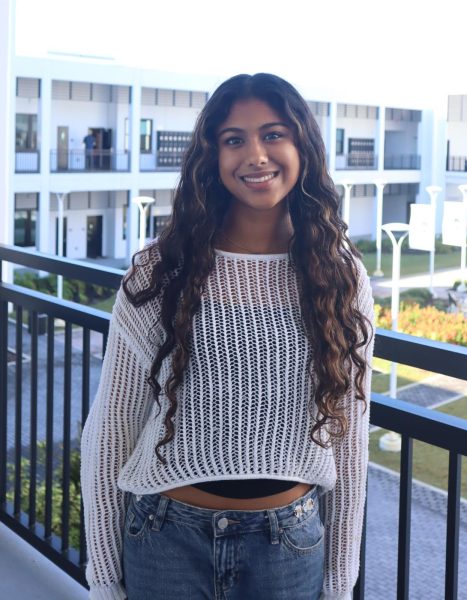
Math Counts is a non-profit that provides engaging math programs for all students in grades 6-8 in U.S. schools to build confidence and improve attitudes about math and problem solving. Junior Lucy Borunda participated in the program in middle school and wanted to find a way to ensure this experience is available for others.
“I liked it a lot, and I was able to go to states both years, and I had a lot of fun doing it. So then I found out that there’s a way, as an alum of the math counts program, that you can apply for a grant and coach other math counts programs through the math counts foundation,” Borunda said.
Last May, Borunda underwent a series of essays and planning, along with reaching out to the schools to make sure they were on board, in order to achieve the grant. The grant provides coaching resources such as a small stipend for resources and materials, and is especially designed for low-income or title one schools, including discounts on registration and more.
“I’ve always liked teaching, so whether it’s in Mu Alpha Theta or any other divisions that I’ve competed in, I’ve always enjoyed helping my peers. So the idea that I could also teach something that I’m really interested in was fun to me,” Borunda said. “I’ve had so much fun in math competitions, I just want to be able to give that to other people.”
Borunda’s program extends to Stuart and Madison and applies to kids in grades 6-8. However, this operation is not limited to Borunda, as the team consists of two other IB juniors, Tania Mulay and Alina Diaz.
“I think there’s a really negative stigma around math and learning, and most students just say they hate math, because, I don’t know, it gets too complicated, but I think overcoming that would allow them to be open to more subjects, maybe including math or more stem-wise,” Mulay said, when explaining her reasoning behind joining the team.
Borunda agrees, adding that a loss of confidence in math can lead to lifelong math insecurity.
“A lot of times, we have teacher shortages and low resources in public schools. As soon as kids get stuck on something, if they never figure out how to do that one thing, they never really catch back up again. So then they’re gonna constantly feel like they’re failing, and that’s what makes it hard for them to ever get back in,” Borunda said.”It also just applies to general problem solving because when math feels so overwhelming, and they have no idea where to start, it makes it harder to do everyday things. For example, a social problem or even trying to figure out how much tile you’ll need for your kitchen backsplash. When problem-solving becomes too daunting, you can never really rely on yourself to do those things.”
Perhaps the most impressive part of this whole operation is the ability of the girls to make time during their busy IB schedules to go tutor students during a school day. The girls have to make the most of their meager 45-minute JA time, and often start earlier in the morning, around 7:30 a.m. They hold sessions 3-4 times a week, open for any and all middle school students, competition or not.
“Tutoring is really important because the way schools teach certain topics might not work for everyone. So personalized teaching helps fill in what a uniform blanket style of teaching in classrooms might not. I always tell students to find ways that work for you,” Mulay said.
The program does not stop there, as the girls continually aspire to continue improving, providing a better quality of education for all low-income students across Hillsborough County.
“We’re definitely thinking of bringing in more volunteers who aren’t juniors, such as sophomores and freshmen, who can help out. We’re also hoping to expand to more than math to just STEM in general to bring in more kids. We hope that will grow the program as well,” Alina Diaz said.