The Congressional App Challenge is arguably the most prestigious award in student computer science. To win, you don’t have to be the best in your school, neighborhood or city, but instead the entire congressional district you live in. For Robinson students, this makes the challenge especially imposing. In the 14th congressional district, which encompasses Tampa Bay, there are over 750,000 people and more than a dozen high schools, meaning any Knights wanting to create an app face stiff competition. Despite the number of competitors students have to face, however, Robinson came out on top.
“We noticed a lack of tools to aid people in understanding how to tailor a sun care plan to their personal needs. For example, many people think that if you [have a darker complexion] you don’t need sunscreen, but you do,” Ammar Omar (’26) said. “‘Sunscreened’ was our attempt to give people one centralized sun safety tool without the financial burdens of doctor’s visits and paywalls of other tools.”
The app, appropriately named Sunscreened, was designed to combat one of Florida’s most deadly adversaries: the sun. Every day, more than 9500 Americans are diagnosed with skin cancer, often because people simply don’t realize how sun exposure adds up. After entering your metrics into the app, it helps you track sun exposure, UV levels, how much time it takes for you to burn, when to reapply, what sunscreen to use, and even how much vitamin D you’re producing. Its most valuable tool, however, is its AI skin analysis. When you upload pictures of your face to the app, it analyzes it using AI to detect damage, blemishes and even growths, telling its users how they’re affected by the sun. A video demonstration can be found here.
These tools were crucial to helping the app stand out from the rest of the competition, but implementing them was certainly not easy.
“The biggest challenge we faced was creating an authentic design that would stand out from existing apps, and we encountered additional design issues during deployment on different devices,” Sharan Santharam Srinivasan (’26). “To overcome these obstacles, we stayed resilient and kept pushing forward because we truly believed in what we were creating.”
To win the challenge, the students had to create a unique app that wasn’t just interesting but also useful. To do this, they had to ensure it was compatible with a variety of devices, adding to their growing workload as they tried to implement AI facial analysis tools, personalized tips and manage schoolwork on the side.
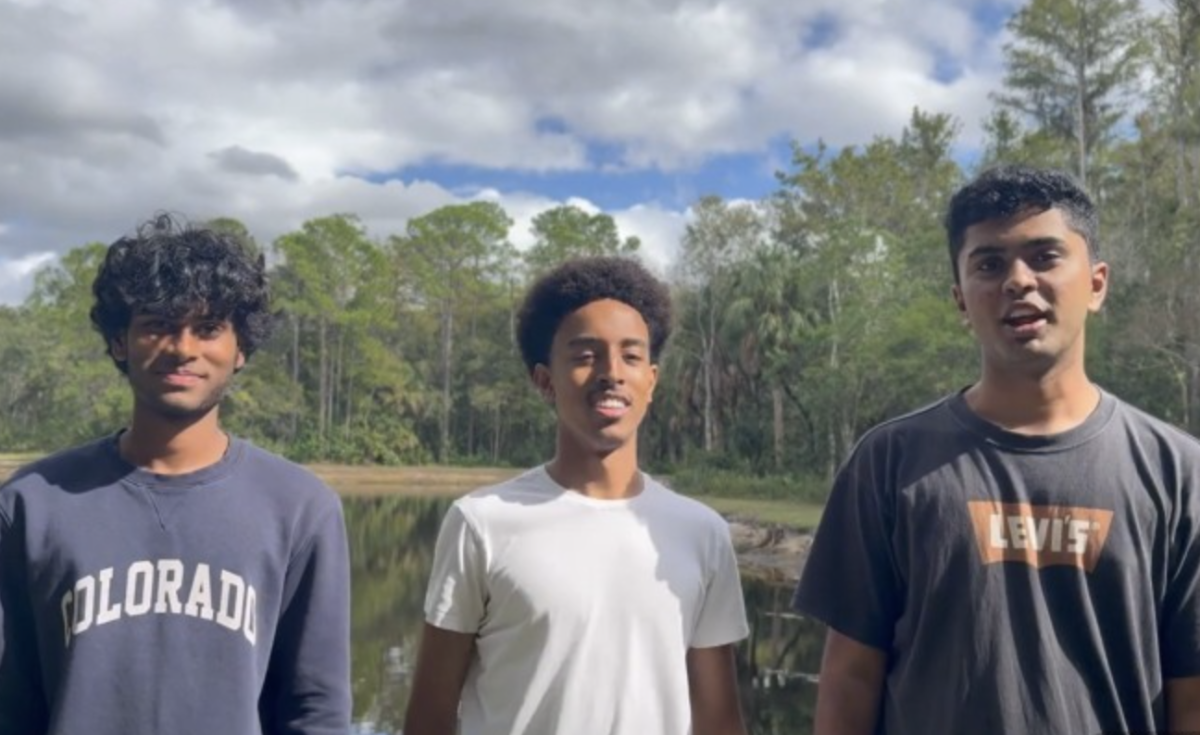
“We are incredibly proud of our students for embracing STEM opportunities and demonstrating how creativity and technology can solve real-world problems. Competitions like the Congressional App Challenge inspire innovation and prepare our learners for future careers in science, medicine, and technology,” Superintendent Van Ayres said in a press release. “Sharan, Ammar, and Sujay exemplify the talent and dedication we see across our district, and their app is a powerful example of using knowledge for the public good. We look forward to cheering them on as they represent our school district at the U.S. Capitol this spring.”
These students’ victory in the congressional app challenge doesn’t mean another accolade on LinkedIn or an additional trophy collecting dust; it reveals the youths’ growing interest in programming and digital creation. Anyone interested in participating next year can visit HOME – (congressionalappchallenge.us).
“I think computer science and programming are important because I feel like they can be used to create technology that genuinely helps make people’s lives easier,” Sujay Korada (’26) said.
With the growth of apps and the internet in the past two decades, students have begun to see huge advances in what they can create. Whether its video games or sun protection tools, students’ creativity, and their potential to help others is now greater than ever.