
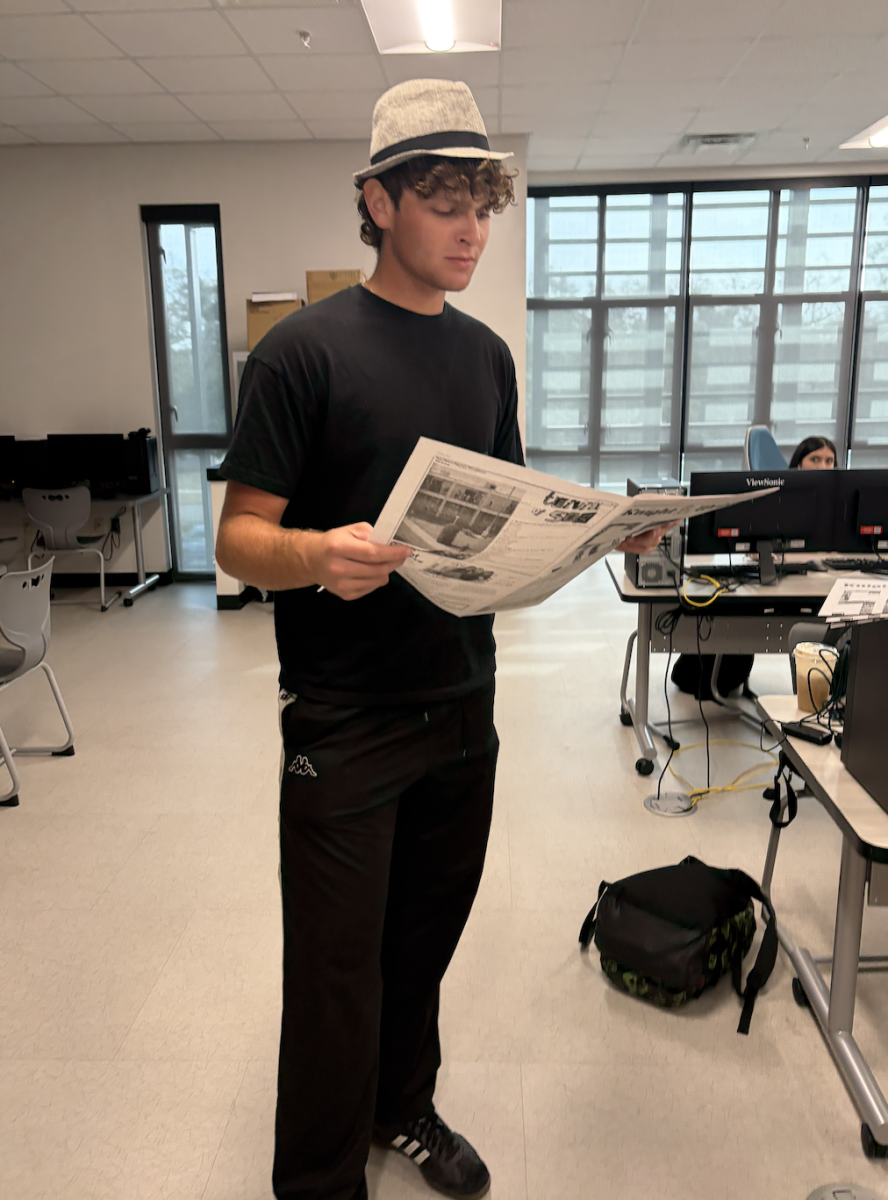
When did it become socially acceptable for athleisure to be the norm in male Western fashion? Dressing creatively has turned into dressing identically. The epidemic of the “copy and paste” style, fueled by Nike shorts and sports teams’ hoodies, makes up a majority of current male “fashion.” Is it because men are too lazy to dress up, or are they afraid of being made fun of for trying something new?
Modern male fashion in the United States has seen a sharp decline in individuality since the mid 2010s. Part of this shift towards athleisure comes from convenience; it’s easy and “socially safe,” you don’t have to think about it, and more importantly, you don’t have to explain it. However, there is a deeper fear at play: the fear of standing out. For many men, dressing with intention often invites jokes, labels or the accusation of being performative.
With the rise of the term “performative male” in recent months, it feels as if any new trend for men is being coined as performative and often made fun of. Any visible effort in male fashion is often dismissed, as if caring about appearance automatically means seeking attention or validation. The quarter zip, once a symbol of business casual, is now just another trend being seen as performative, which is ironic as the garment itself hasn’t changed, but the culture around male fashion has. Individuality becomes something to suppress rather than express.
However, the stagnation isn’t nationwide. I will say that major cities in the U.S. break free from the copy-and-paste plague. On a recent trip to New York City, the “swag gap” was immediately recognized. Vintage clothing, layered outfits and an overall vibe that fits everyone’s individual style. The confidence behind expression is something I’ve begun to admire, even when the style itself isn’t something I would ever wear. What’s admirable isn’t the clothes themselves, but the willingness to be seen in a culture where blending in is safer than standing out. It takes comfort in one’s identity to express oneself, especially when wearing something that isn’t universally liked. This confidence is rare, particularly in men, when fashion in Western culture is stigmatized.
Male fashion in America began to fade as creativity turned into conformity and effort became something to be mocked rather than appreciated. The dominance of the copy-and-paste plague reflects the fear of most men to be seen as “different” for expressing themselves. Expression adds depth to public life, breaking visual monotony. Bringing back male individuality doesn’t require abandoning comfort or trends, but changing how we view effort itself, not as something embarrassing, but as something worth admiring.