
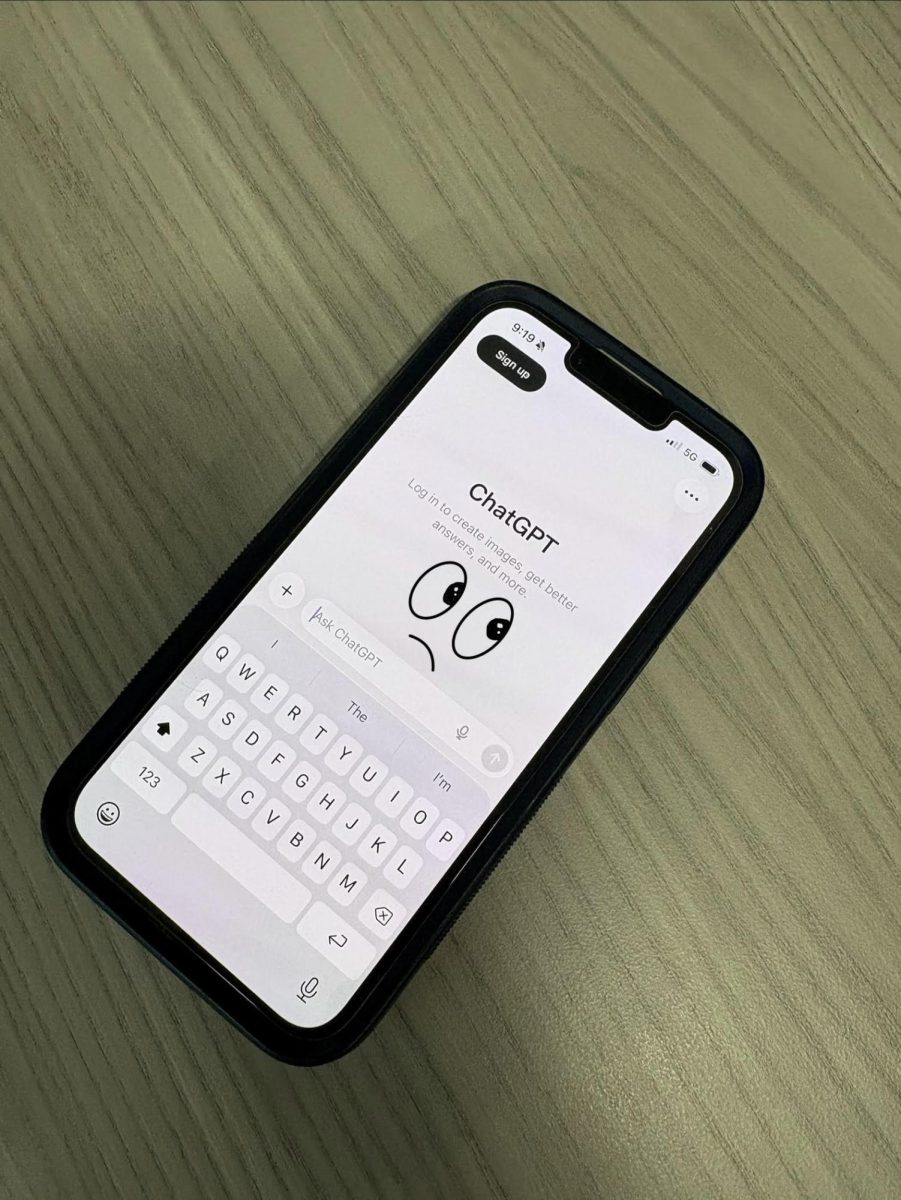
Being a high school student is nothing like High School Musical makes it out to be. Instead of carefree days and impromptu songs, every student buries themselves with multiple college-level classes, constantly juggling assignments. It’s no surprise when a student, suddenly remembering an essay due tonight, turns to ChatGPT, the most prominent AI platform, to ask for some “guidance.” With just a few words and clicks, a whole draft appears, miraculously. Yet, after tweaking a few words, just about to hit the submit button, a wave of guilt flows through them. They think: why does this feel off?
AI guilt is a psychological phenomenon explaining the remorse, shame or unease individuals feel when relying on generative AI to perform tasks for them. Nowadays, with the rise of dependence on AI to do almost any academic task a human could ask for, it’s a feeling more people deal with than the average person thinks. The guilt-filled persona phenomenon is more real than ever, and it should be taken in as a warning sign to those who overuse it.
But what exactly causes this sense of unease in the first place? It doesn’t come out of nowhere. For many, this feeling is driven by two main factors: the fear of cheating and the risk of being caught. In recent years, nearly every school or academic setting has added warnings about AI use. Whether you’re at a debate tournament or doing testing, we are constantly reminded that generative AI is not allowed.
Although students are aware that AI use is often prohibited in these places, many still turn to it when they are not being closely monitored. In those moments, it can feel like a quick and harmless shortcut. Yet afterward, that decision can trigger overthinking as the fear of being caught sets in. What starts as convenience can quickly turn into guilt, creating stress that lasts well beyond the assignment itself.
A recent study found that 41% of employees or students who use ChatGPT use it to write or generate content, with 36% of Gen Z users prompted to feel guilty about using these platforms. Even if students and employees use AI because they feel overwhelmed by work, it’s closely associated with cheating and a violation of academic integrity, producing anxiety and furthering their guilt.
Some people claim that these feelings are superficial and based on misunderstanding, arguing that AI is “better” because it is more efficient and convenient. Yet, people don’t naturally feel guilty about something if they truly believe it is right. Rather than being dismissed, these feelings should be recognized as warning signs. Even as the use of AI becomes more common, the discomfort many students experience highlights a growing sense of over-dependence and a shift away from their original values. If you feel guilty about relying on a machine to complete your work, it is worth paying attention to that reaction. These feelings indicate that something is not in the norm, having people’s inner conciseness prompts people to reconsider their actions.
AI guilt isn’t just random guilt people feel after talking to a robot. It shows up for a reason, even if people don’t want to admit it. This guilt is tied to a matter of ethics and integrity, not just emotion without a cause. AI won’t be going away anytime soon. The goal shouldn’t be avoidance- it should be responsible use.