
In 1790, English writer and statesman Edmund Burke, while writing about the French Revolution, declared that the age of chivalry was gone. In 1823, English poet Lord Byron further bemoaned the death of chivalry as a result of a 17th century novel “Don Quixote,” by Miguel de Cervantes Saavedra, which satirized chivalry. The idea that “chivalry is dead,” is not novel in itself.
Today, what we consider to be chivalrous is inherently gendered. It typically refers to an honorable or a respectable way of acting, especially towards women. It is not typical to hear someone talking about “chivalry” and it referring to a women’s mannerisms towards a man. Examples of chivalry include holding the door open for a woman, paying for the check at dinner, or giving her your coat when she gets cold. And many men were brought up believing that these were the polite things to do, to show your respect and love for women.
Unfortunately, underneath this lies deep-rooted patriarchy. Benevolent sexism is defined as supposedly well-natured attitudes towards women, like paying for their meal or opening the car door for her, that reinforce their status as inferior to men. Chivalry is, more or less, benevolent sexism hidden under a heavy coat of euphemisms like “respect” and “honor.”
A survey published by the Journal of Personality and Social Psychology to measure the level of benevolent sexism worldwide found that it was not only incredibly common, but that it is also linked to gender inequality. In countries where people were likely to agree with the benevolent, “chivalrous” parts of the survey, gender inequality was higher. Essentially, the part of our culture that champions chivalry, when directed towards women, perpetuates their unequal status.
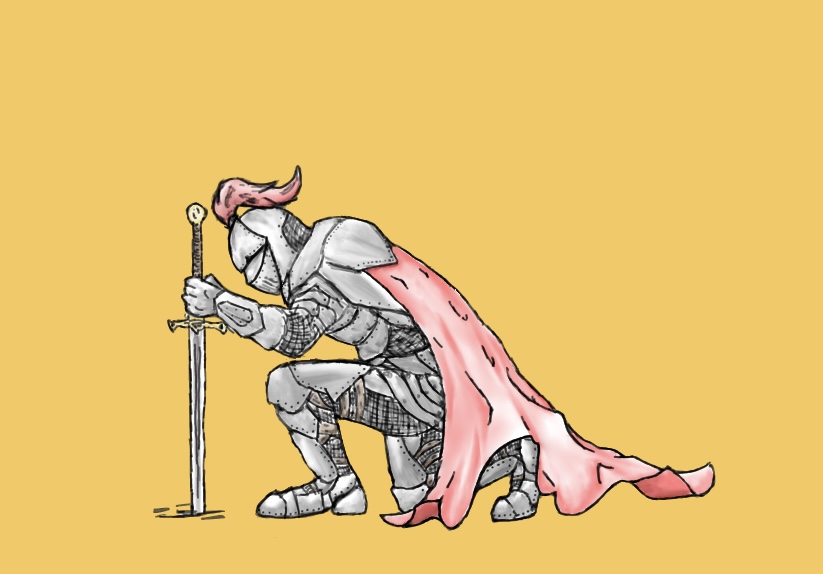
Chivalry has never been on the side of women. Many people are familiar with the chivalry commonly associated with the Middle Ages, where a knight nobly fights to protect the honor of his woman. In these theatrical and melodramatic love stories, which have little reflection to how knights were actually acting, women are once again considered property.
The original “Code of Chivalry” that emerged in France during the Middle Ages, which instructs knights to uphold the honor of women, was only ever extended to noble women of high prestige. Knights were still allowed to take advantage of women of color, women of the lower class, and colonized women. And this is true of examples of chivalry throughout history. The Ku Klux Klan, or rather the Knights of the Ku Klux Klan, include in their founding documents the mission to “defend womanhood.” Of course, this again only applied to white women.
As Jean Stapleton loudly declares in a 1975 Carol Burnett Show comedy skit, “You’re not just holding the door open. What you’re doing is reminding me of 50 centuries of male domination and oppression!” While this may seem like a rather severe and quick assumption, and perhaps the wrong way of going around this encounter, what she says has some merit. Chivalry is a complicated and nuanced topic, but, evidently, it is never “just” rushing to open a door for a woman, even when she is ahead of you, and it is not “just” paying for the check even when she insists on paying for half, it is always so much more.