As much as it hurts to say, I think it’s time we finally admit it- the Rays are a poverty franchise. Or more so, they were. Since their purchase by an ownership group made up of Patrick Zalupski, Bill Cosgrove and Ken Babby, the team has launched various ambitious efforts aimed at revitalizing the organization. So far, this has come in two parts: The development of plans to build a new, cutting-edge stadium and a multitude of events attempting to increase fan involvement and viewership, such as the Community Engagement Series, which came to Robinson on April 2.
Despite their St. Petersburg ballpark only being 36 years old, for the past 25 years, the Rays have been locked into a constant struggle, trying to find a new home. In the past, plans have fallen apart due to zoning, monetary and governmental disputes. However, now, with the Hillsborough College plans endorsed by both local and state officials as well as college administrators, the only barrier left is Tampa residents, whom the Community Engagement Series tries to placate.
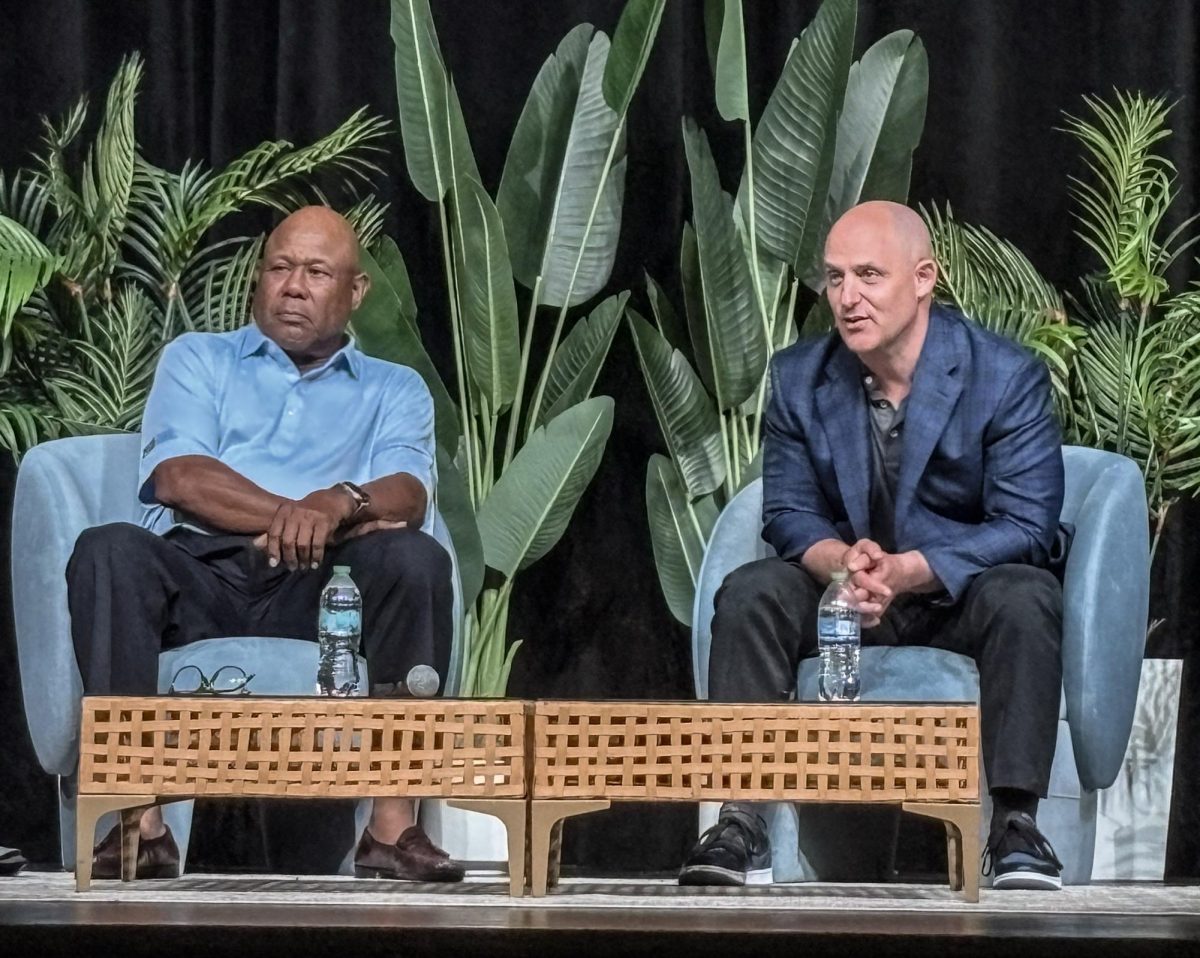
After a brief introduction by Principal Brown, Ken Babby, CEO of the Rays and Dr. Ken Atwater President of HCC kicked off the meeting by presenting a brief video showing potential renderings of the stadium. With restaurants, office buildings, green spaces, and of course a college, the planned stadium is incredibly ambitious, something that has made many Rays fans nervous.
After decades of confusion and failed plans, many residents of Tampa are concerned that the 2.3 billion dollars needed for the stadium will fail to materialize or will be paid using tax revenue. Fears surrounding the funding for the stadium persisted throughout the Community Engagement Presentation and especially into the questioning period. During his speech, Babby revealed that the city will be covering at least 1.2 billion through the Community Improve Tax. Created in 1996, the CIT was created to fund public infrastructure products such as storm drainage, hurricane recovery and other various issues threatening the bay. Under the proposed plan, the CIT would be entirely focused on constructing the new stadium, with the tax likely increasing to incorporate the surge in spending.
However, not all economic impacts of the stadium were negative. Throughout the session, Babby was sure to emphasize the 11,900 jobs, ten million annual visitors and 55 billion dollars the stadium would create. Additionally, he noted that the proposed plan includes the largest community investment program in Tampa sports history, reinvesting in things such as buses, parks and a sports medicine program.
The CEO of the Rays then concluded his presentation with a mixture of hope and finality. Throughout his speech, he described the proposed ballpark as the Rays “forever home,” noting the unique aspects of the stadium that make it iconically Tampa. However, he also noted that it was now or never. He described how they’ve managed to get both the city and the state on their side, and now they just want support from the community, despite the lack of transparency around actual benefits, feasibility and cost.
The Rays don’t just want to build a stadium for the fans; they want to build a stadium with the fans, taking into account what the people want. However, this olive branch of cooperation is weakened due to various concerns the organization refuses to address, becoming apparent through the community engagement series.
As people began to leave, Babby urged any concerned residents to contact him at [email protected] or to come to the next meeting. Regardless if you have concerns or want to show support, these meetings are fantastic ways to interact with the organization and push for a better future for the Rays in Tampa.