
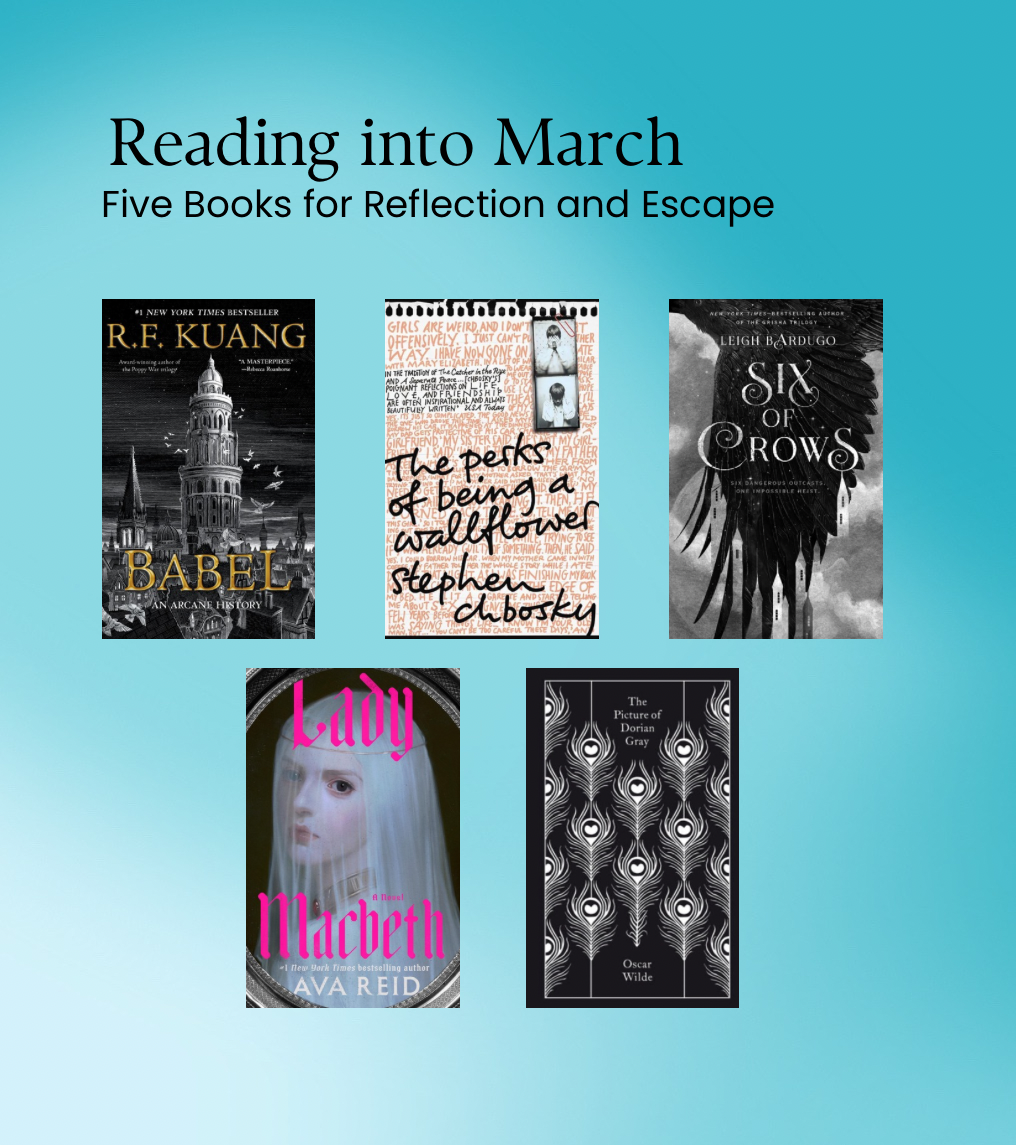
As we approach the transition into March, it’s the perfect time to dive into a selection of books that span various genres, emotions and eras. These five novels offer are diverse in plot and setting, but a common theme runs through all of the stories: the dark interplay between desire, choice and consequence.
Babel by R.F. Kuang:
In Babel, R.F. Kuang’s speculative historical novel, language is more than just a means of communication; it is a tool of power, control and rebellion. Set in 1830s Oxford, the book follows Robin Swift, a young scholar recruited by the prestigious Translation Institute to study and harness the magical power of language. As Robin delves deeper into this system, he begins to realize the brutal impact of the colonial enterprise, which exploits non-Western languages and cultures for the benefit of the empire. Kuang’s novel brings readers to question the ethical underpinnings of our modern world.
The Perks of Being a Wallflower by Stephen Chbosky:
Stephen Chbosky’s The Perks of Being a Wallflower is a tender yet heartbreaking coming-of-age story that explores the tumultuous teenage years with raw honesty. The protagonist, Charlie, is an introverted high school freshman who navigates the complexities of friendship, family and self-identity while dealing with deep personal trauma. At its core, the novel is about the pain and beauty of growing up and the profound impact of human connection.
Six of Crows by Leigh Bardugo:
Leigh Bardugo’s Six of Crows takes readers into the dark and gritty world of the Grishaverse, where a group of outcasts comes together to pull off a heist that could change their lives forever. This action-packed fantasy novel introduces Kaz Brekker and his band of misfits—each with their own troubled pasts and moral dilemmas. Bardugo masterfully explores themes of morality, trust and betrayal, asking whether anyone can truly be defined by their actions or if everyone is simply shaped by circumstance. The novel reminds us of the complexity of human nature, where even the most flawed individuals can demonstrate moments of unexpected kindness and bravery.
Lady Macbeth by Ava Reid:
Ava Reid reimagines the famous Shakespearean character of Lady Macbeth, offering a fresh and darkly psychological perspective on the ambitions and regrets that drive her. This retelling centers on Lady Macbeth’s internal struggle as she wrestles with her ambition, guilt and desire for power. Reid’s take transforms Lady Macbeth into a figure of both empathy and menace, exploring the consequences of unchecked ambition.
The Picture of Dorian Gray by Oscar Wilde:
Oscar Wilde’s The Picture of Dorian Gray remains a classic exploration of vanity, morality and the consequences of living a hedonistic lifestyle. The story follows Dorian Gray, a young man of extraordinary beauty who, under the influence of the decadent Lord Henry, embarks on a life of indulgence and excess. As Dorian’s portrait ages and bears the marks of his corrupt soul, he remains physically untouched by time or sin. Wilde’s novel is a chilling meditation on the destructive power of vanity and the pursuit of pleasure, showing how one’s inner life can be irrevocably scarred even when outward appearances remain unspoiled.
Taken together, these five novels explore a shared theme of the tension between personal desires and the societal, moral and psychological consequences of acting upon them. Each book showcases the ways in which our desires can shape and sometimes warp who we are.